Guppy
Poecilia reticulata · family Poeciliidae
Also: Millionfish
Parameters
- Temperature
- 22–28 °C
- pH
- 7–8
- Hardness
- 9–19 °dGH
- Tank volume
- from 40 L
- Maximum size
- up to 5 cm
- Group size
- min 3, ideal 6
- Temperament
- Peaceful
- Swimming zone
- Top
- Difficulty
- Beginner
- Lifespan
- 2–3 years
Health & Common Diseases
Key risks, vulnerability factors, and veterinarian-reviewed treatment guides.
Columnaris (Cotton Mouth / Saddleback)
Fast-acting Gram-negative bacterial infection thriving in warm organic-rich water. Drop temperature to 21–22 °C and start emergency salt + antibiotic therapy immediately.
Dropsy (Pinecone Disease)
Bacterial fluid buildup often triggered by metabolic stress, sudden ammonia spikes, or low temperatures.
Description
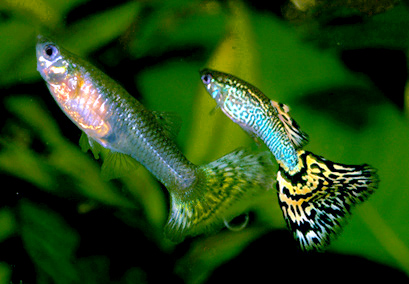
The guppy is a livebearer with pronounced sexual dimorphism: males are vivid with long fins; females are larger and plainer. They breed easily — good for beginners, but population control is essential.
There are hundreds of strains. Wild guppies are less showy but tougher. Hard, alkaline water is the norm, unlike most tetras.
Care
Group composition
A 1 male to 2–3 females ratio reduces harassment of females. An all-male group is workable; an all-female group is the most peaceful configuration.
Breeding
Guppies breed continuously. Without moving pregnant females to a breeder box, fry hide in the plants and only 10–20% reach adulthood.
Disease prevention & emergency care
Due to dense schooling and sensitivity to organic waste, this species is prone to fast-moving bacterial infections. If you spot white cotton-like mouth growth or saddleback lesions, follow our 24-Hour Columnaris Treatment Protocol; for abdominal swelling or raised pinecone scales, apply the 48-Hour Fish Dropsy Emergency Guide.
Feeding
Quality flakes + frozen or live food. Include a plant component (spirulina): guppies are partly herbivorous. Feed twice a day in small portions.
Compatibility
- Good
- Ideal
- Good
- Avoid
- Caution
- Goldfish
Carassius auratus
Incompatible in both temperature and behavior: goldfish are coldwater and too large.
Danger
FAQ
- How many guppies can be kept in a 40 L tank?
- Starting group — 6 fish (1M/5F or 3M/3F). Plan for population control after 2–3 months as they breed.

Goldie editorial team
Practising aquarists with a combined 30+ years of experience · Biologists and editors, fact-checking against FishBase and Seriously Fish · Every piece is reviewed by a qualified ichthyologist before publication

Scientific board — ichthyologists and veterinarians
Ichthyologists and veterinarians with university degrees · Reference FishBase, Seriously Fish and peer-reviewed literature · Sign every reviewed article with their credentials shown
Sources
- FishBase: Poecilia reticulata · FishBase · 2026-05-22
- Seriously Fish: Poecilia reticulata · Seriously Fish · 2026-05-22