Dwarf Otocinclus
Otocinclus vestitus · family Loricariidae
Also: Otocinclus Catfish, Dwarf Suckermouth Catfish, Otocinclus vestitus
Parameters
- Temperature
- 22–28 °C
- pH
- 6–7.5
- Hardness
- 3–10 °dGH
- Tank volume
- from 40 L
- Maximum size
- up to 3.8 cm
- Group size
- min 6, ideal 10
- Temperament
- Peaceful
- Swimming zone
- Bottom
- Difficulty
- Intermediate
- Lifespan
- 3–5 years
Description
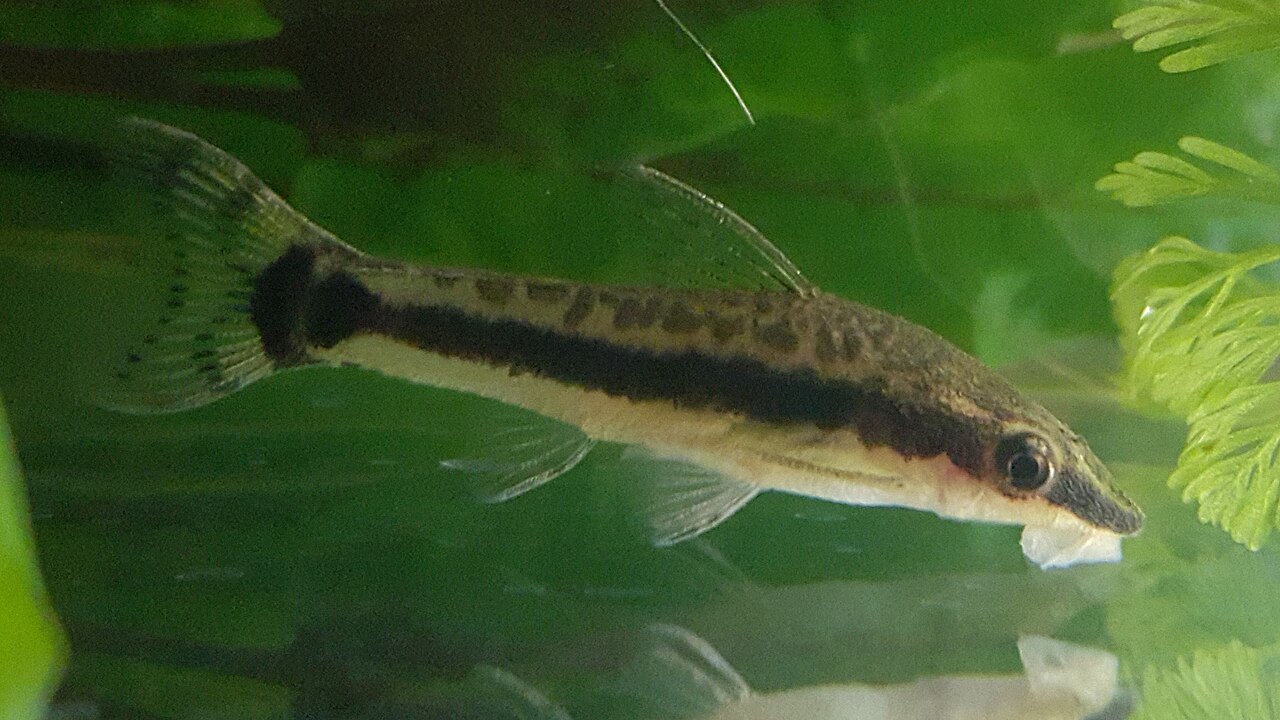
The Dwarf Otocinclus (Otocinclus vestitus) is the gentlest vertebrate algae eater for High-Tech planted aquascapes. Reaching just 3.5–4 cm, it tirelessly polishes delicate plant leaves and glass of brown diatoms and soft green algae without ever uprooting foreground carpets (Monte Carlo, HC Cuba) or rasping fragile stem plants.
Care
Keep in a social group of 6–10+ individuals in a mature aquarium of at least 40 liters (22–28 °C, pH 6.0–7.5, GH 3–10). Only introduce Otocinclus after the tank has cycled for 4–6 weeks with plenty of natural biofilm. In CO2-injected tanks, keep the drop checker strictly lime-green and ensure strong nighttime oxygenation.
Feeding
Dedicated herbivore and biofilm grazer: consumes soft brown diatoms, green film algae, and microbial Aufwuchs. Once visible tank algae are depleted, supplement every 2–3 days with blanched zucchini slices, cucumber, spinach, and sinking spirulina/algae wafers so their bellies stay plump and rounded.
Breeding
Triggered by cool water changes in soft, well-oxygenated tanks, females deposit 20–40 adhesive eggs on the undersides of Anubias or Bucephalandra leaves. Fry hatch within 48–72 hours and graze immediately on microscopic biofilm and powdered spirulina.
Compatibility
- Good
- Amano Shrimp
Caridina multidentata
Premier cleanup tandem: Amano shrimp tackle hair algae while Otocinclus graze brown diatoms.
Good - Celestial Pearl Danio
Danio margaritatus
Ideal peaceful companions for nature-style planted aquascapes.
Good - Good
FAQ
- Why do Otocinclus sometimes die during the first week?
- Wild-caught Otos often starve in transit or get placed into sterile new tanks without biofilm. Always pick fish with round bellies, drip-acclimate for 60 minutes, and offer blanched zucchini in mature aquariums.
- Do Otocinclus eat hair algae or Black Beard Algae (BBA)?
- No, Otocinclus specialize in brown diatoms and soft green film algae. Pair them with Amano Shrimp to tackle tough hair algae.

Goldie editorial team
Practising aquarists with a combined 30+ years of experience · Biologists and editors, fact-checking against FishBase and Seriously Fish · Every piece is reviewed by a qualified ichthyologist before publication

Scientific board — ichthyologists and veterinarians
Ichthyologists and veterinarians with university degrees · Reference FishBase, Seriously Fish and peer-reviewed literature · Sign every reviewed article with their credentials shown
Sources
- FishBase: Otocinclus vestitus · FishBase · 2026-05-22
- Seriously Fish: Otocinclus vestitus · Seriously Fish · 2026-05-22