Kribensis Cichlid
Pelvicachromis pulcher · family Cichlidae
Also: Rainbow Krib, Purple Cichlid, Pelvicachromis pulcher
Parameters
- Temperature
- 24–27 °C
- pH
- 6–7.5
- Hardness
- 5–14 °dGH
- Tank volume
- from 70 L
- Maximum size
- up to 9 cm
- Group size
- min 2, ideal 2
- Temperament
- Peaceful
- Swimming zone
- Bottom
- Difficulty
- Beginner
- Lifespan
- 5–8 years
Description
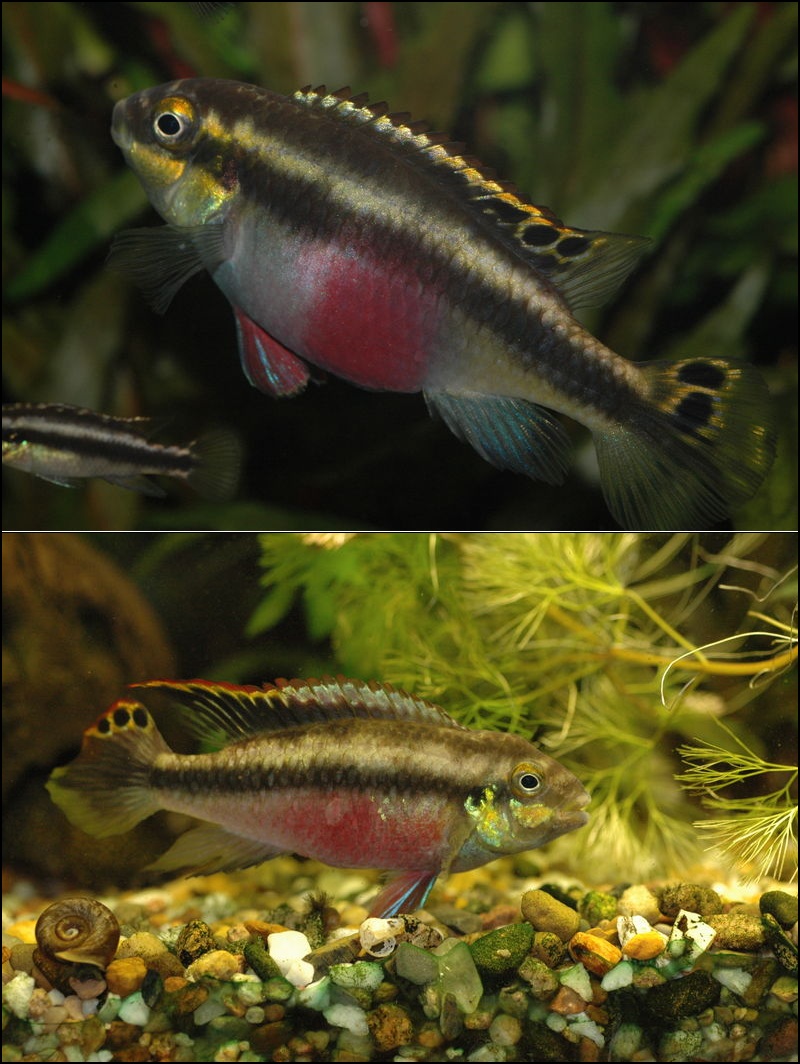
The Kribensis (Pelvicachromis pulcher) is the ultimate West African dwarf cichlid for planted community aquariums. Unlike rock-dwelling Rift Lake cichlids, Kribs thrive in neutral-to-slightly-acidic water without uprooting plants. Remarkably, females (7 cm) are even more intensely colored than males (9 cm), sporting a glowing plum-purple and crimson-wine belly that flares brilliantly during courtship.
Care
A bonded pair thrives in a 70-liter planted tank (24–27 °C, pH 6.0–7.5, GH 5–14) furnished with fine sand, driftwood, tough plants (Anubias, Bolbitis, Cryptocorynes), and enclosed caves such as half coconut shells or ceramic domes. Peaceful outside of spawning, parents fiercely defend a 25 cm radius around their cave when leading fry.
Feeding
Unfussy omnivore: readily accepts sinking dwarf cichlid pellets, spirulina flakes, frozen brine shrimp, daphnia, bloodworms, and blackworms.
Breeding
Classic cave spawner: the female attaches 100–250 adhesive eggs to the ceiling of a coconut cave. Both parents guard the cave and shepherd the free-swimming cloud of fry across the tank floor for 3–4 weeks.
Compatibility
- Congo Tetra
Phenacogrammus interruptus
Classic West African biotope pairing: Congo Tetras school in the upper water column away from Kribensis spawning caves.
Good - Bristlenose Pleco
Ancistrus cirrhosus
Coexist in 100+ liter tanks if Bristlenose plecos and Kribensis pairs have separate caves at opposite ends.
Caution - Pygmy Corydoras
Corydoras pygmaeus
Brood-guarding Kribensis fiercely attack bottom-dwelling Corydoras that wander near their cave.
Avoid - Avoid
FAQ
- How do you tell male and female Kribensis apart?
- Males grow larger (9 cm) with pointed dorsal and spade-shaped tail fins, whereas females are smaller (7 cm) with a rounder, intensely plum-crimson belly.
- Does water pH affect the sex ratio of Kribensis fry?
- Yes! Acidic water (pH 5.5–6.2) yields mostly male fry, neutral water (pH 6.8–7.0) gives a 50:50 split, and slightly alkaline water (pH 7.3–7.5) produces mostly females.

Goldie editorial team
Practising aquarists with a combined 30+ years of experience · Biologists and editors, fact-checking against FishBase and Seriously Fish · Every piece is reviewed by a qualified ichthyologist before publication

Scientific board — ichthyologists and veterinarians
Ichthyologists and veterinarians with university degrees · Reference FishBase, Seriously Fish and peer-reviewed literature · Sign every reviewed article with their credentials shown
Sources
- FishBase: Pelvicachromis pulcher · FishBase · 2026-05-22
- Seriously Fish: Pelvicachromis pulcher · Seriously Fish · 2026-05-22